Resposta rápida
Os ímanes padrão de classe N começam a perder a sua força a 80 °C (176 °F), com uma perda totalmente reversível. O dano permanente ocorre acima da temperatura máxima de funcionamento da respetiva classe (que varia entre 100 °C e 230 °C, dependendo da classe). A desmagnetização total ocorre à temperatura de Curie, entre 310 °C e 400 °C.
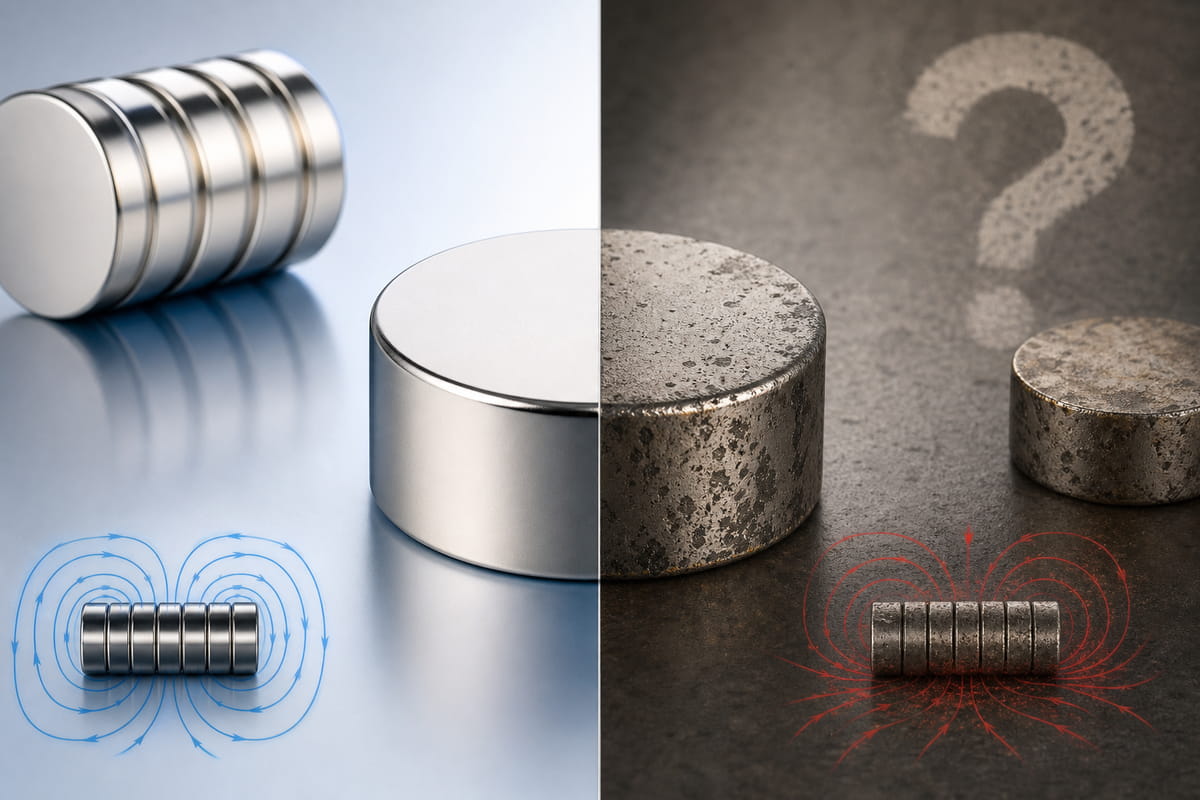
Quando acabaste de imprimir um objeto em 3D. Colocaste lá dentro uns ímanes pequenos e potentes, à espera que a peça acabada se prendesse à tua bancada de trabalho metálica como se estivesse possuída.
Mas, em vez disso? Escorre-se logo.
A temperatura a que os ímanes de neodímio perdem o magnetismo não se resume a um único valor. Existe um intervalo. E se não conhecer os detalhes relativos a o seu Se optar por imãs de qualidade inferior, está basicamente a arriscar o seu projeto.
Neste artigo, na qualidade de profissional fabricante de ímanes de neodímio personalizados, deixa-me explicar-te isto para que nunca tenhas de aprender esta lição da maneira mais difícil.
A resposta curta (para os impacientes)
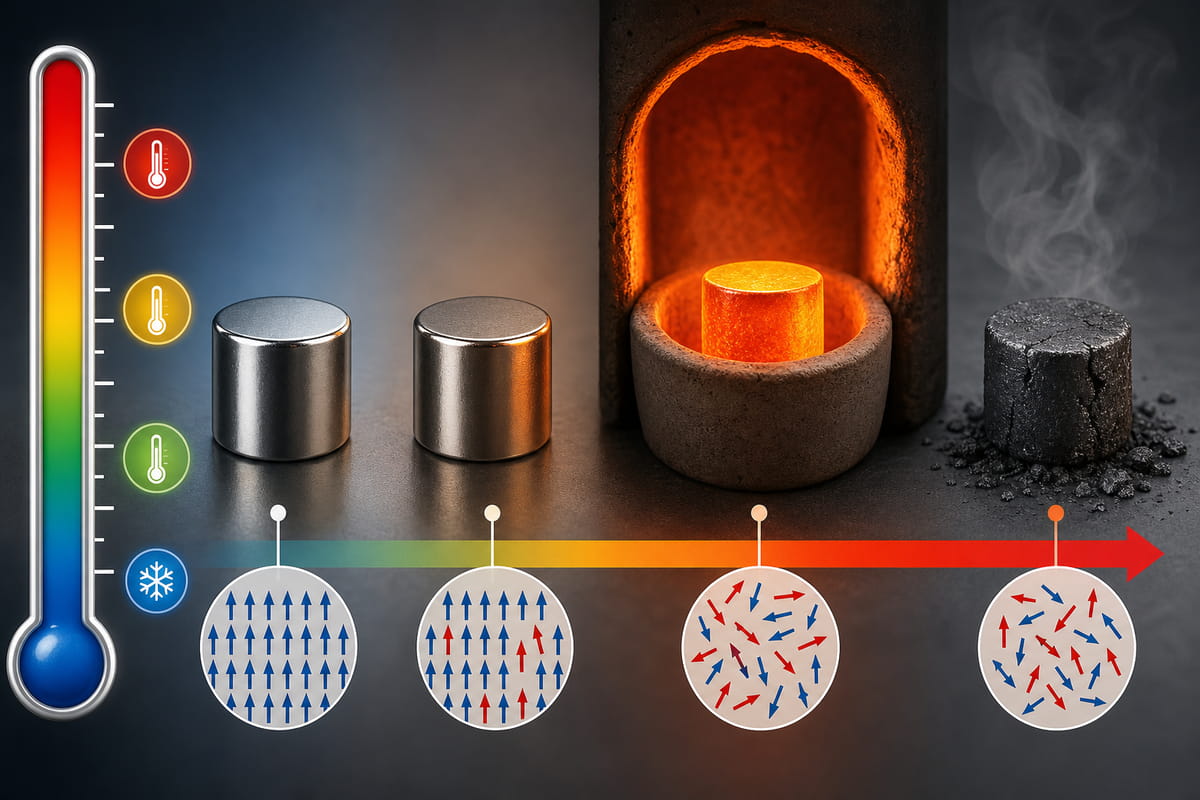
Os ímanes de neodímio comuns começam a perder a sua força acima de 80 °C (176 °F) . Essa perda é temporária se os arrefeceres novamente. Mas se os forçares demasiado? Danos permanentes.
E à temperatura de Curie (aproximadamente entre 310 °C e 400 °C), todo o magnetismo desaparece. Puf. Sem volta a dar.
Mas isso é apenas a ponta do iceberg. Deixa-me mostrar-te exatamente o que acontece em cada intervalo de temperatura.
Perda temporária vs. perda permanente: o que se passa realmente no interior do íman
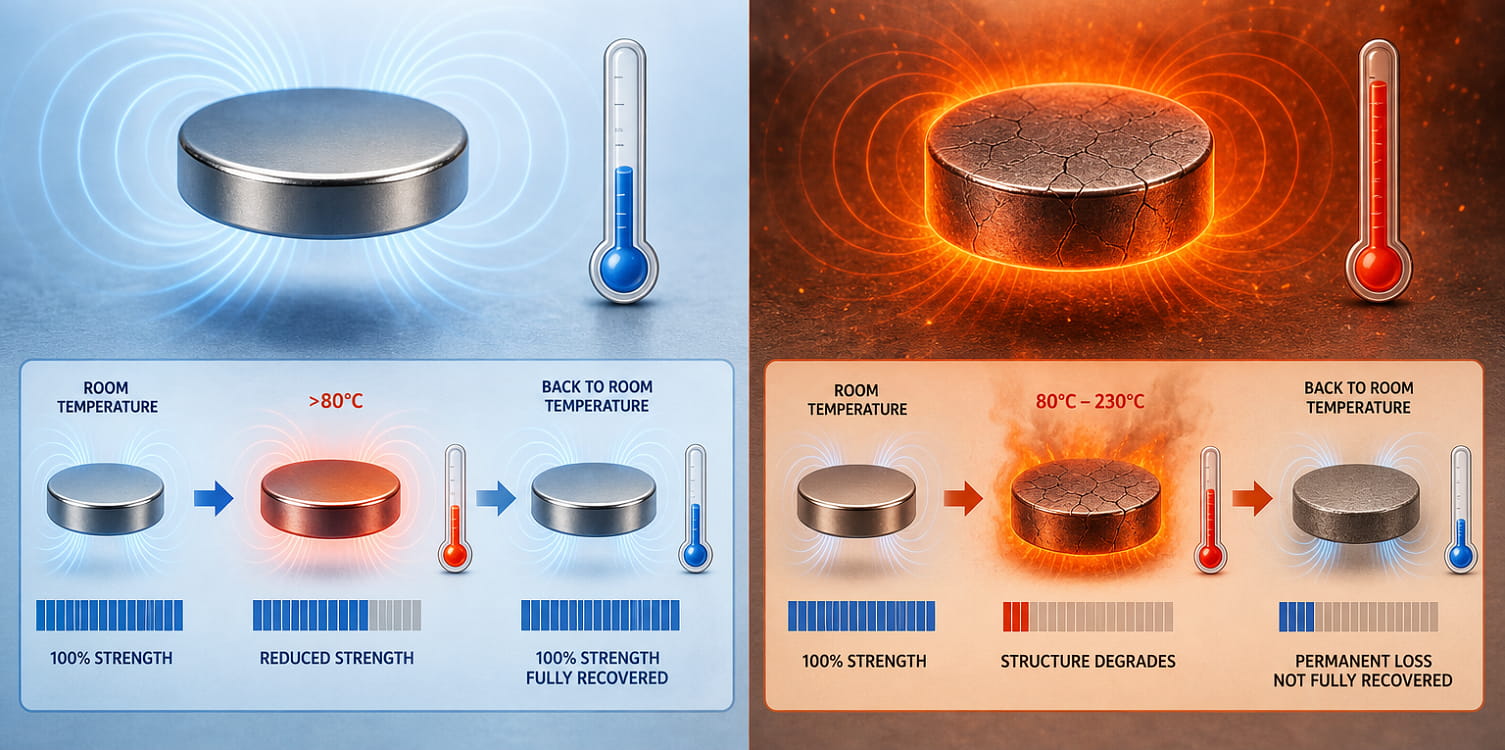
Pensa no teu íman como uma sala cheia de gente, com todos virados na mesma direção. Esse é o teu alinhamento magnético.
Quando se aquece, essas “pessoas” começam a ficar inquietas. Movem-se mais. Algumas começam a virar-se para o lado errado.
- Perda temporária (>80 °C) : Por cada aumento de 1 °C na temperatura, um íman de neodímio padrão perde aproximadamente 0.11% da sua força magnética. Mas eis a boa notícia: assim que arrefecer até à temperatura ambiente, recupera toda a sua força. Eu próprio já testei isto. É totalmente reversível.
- Perda irreversível (80 °C a 230 °C) : É aqui que as coisas ficam complicadas. Se ultrapassar a temperatura máxima de funcionamento específica do seu íman durante demasiado tempo, a estrutura interna acaba por se degradar. E quando arrefecer? Não voltará a recuperar toda a sua força. Nunca mais.
Dica profissional: Essa perda de 0,111 TP3T por grau acumula-se rapidamente. A 150 °C, a perda temporária ronda os 7-81 TP3T. Mas se ultrapassar o limiar desse grau, essa perda torna-se permanente.
Temperaturas máximas de funcionamento por classe (marcar esta página)
Nem todos os ímanes de neodímio são iguais. Os fabricantes atribuem diferentes classificações de temperatura consoante o tipo específico. Aqui está a informação que precisa:
| Nota | Temperatura máxima de funcionamento | O que isto significa para si |
|---|---|---|
| Nível N (Padrão) | 80 °C (176 °F) | Um íman básico da Amazon. Adequado para projetos à temperatura ambiente. |
| Grau M | 100 °C (212 °F) | Resiste à água a ferver. |
| Grau H | 120 °C (248 °F) | Vamos falar a sério. |
| Categoria SH | 150 °C (302 °F) | Aplicações a altas temperaturas. |
| Nota UH | 180 °C (356 °F) | De qualidade industrial. |
| Nível EH | 200 °C (392 °F) | Ambientes muito quentes. |
| Grau VH/AH | 230 °C (446 °F) | O nível mais alto. |
Uma coisa a ter em atenção: os graus de resistência mais elevados, como o N50 e o N52, têm, na verdade, inferior temperaturas máximas de funcionamento – por vezes tão baixas quanto 60 °C. E aquele íman superpotente que compraste? Pode ser que menos mais resistente ao calor do que um N42 normal. Há sempre compromissos, não é?
A temperatura de Curie: onde os ímanes vão morrer
É aqui que A que temperatura os ímanes de neodímio perdem o magnetismo? torna-se absoluto.
No Temperatura de Curie, a agitação térmica destrói completamente o alinhamento magnético do material. Pense nisso como o derretimento do gelo – uma vez transformado em água, já não volta a ser um cubo de gelo por si só.
No caso dos ímanes de neodímio padrão, a temperatura de Curie situa-se entre 310 °C e 370 °C (590 °F a 698 °F) .
Mesmo depois de arrefecer? Não tem quaisquer propriedades magnéticas. Seria necessário um campo externo ridiculamente forte para o remagnetizar. E, sinceramente? Nunca fica exatamente na mesma.
Como a forma influencia a temperatura máxima de funcionamento
É aqui que as coisas ficam interessantes.
Seria de pensar que a temperatura máxima de funcionamento é uma propriedade do material, certo? A água ferve a 100 °C, quer esteja num copo alto ou numa tigela larga.
Ímanes? Não é assim tão simples.
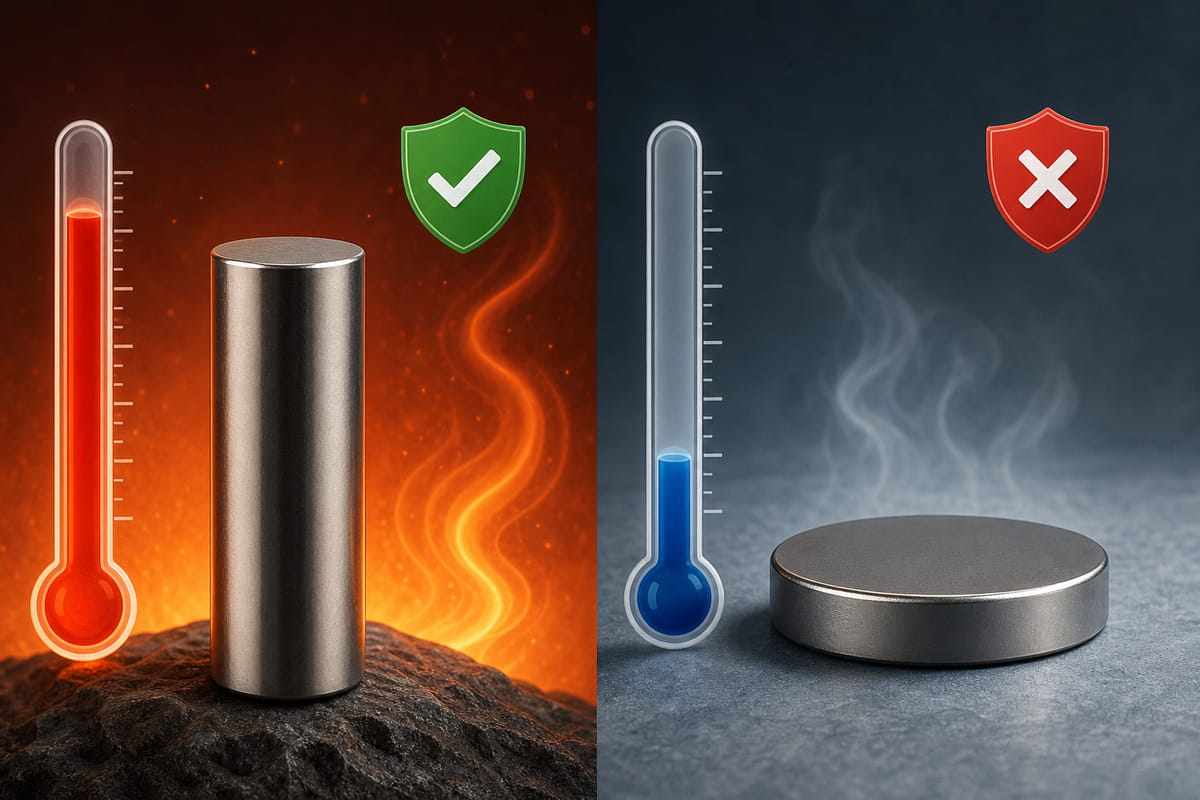
A forma do seu íman tem um impacto direto na temperatura máxima que este pode atingir antes de perder desempenho. Os engenheiros chamam a isto o “coeficiente de permeância” (ou Pc). Eis a regra geral:
- Ímanes altos e estreitos (como um cilindro em que a altura é maior do que o diâmetro) = maior resistência à temperatura
- Ímanes finos e largos (como um disco plano) = menor resistência à temperatura
Deixem-me dar-vos um exemplo concreto. Um íman de disco N42 padrão com 1/2″ de diâmetro por 1/8″ de espessura? A sua temperatura máxima de funcionamento real é de apenas cerca de 60 °C – apesar de a indicação indicar 80 °C.
Mas um cilindro de 1/4″ em que o diâmetro é igual à altura? Esse mesmo material N42 consegue suportar até 140 °C antes de se verificarem perdas irreversíveis.
É de deixar qualquer um de boca aberta, não é?
Aprendi isto da maneira mais difícil, quando não parava de me perguntar por que razão os meus ímanes de disco finos continuavam a falhar em ambientes moderadamente quentes. Agora utilizo a Calculadora de Ímanes para verificar o valor de Pc em cada projeto.
Baixas temperaturas? Na verdade, os ímanes adoram o frio
Eis algo que vai contra o que se poderia esperar.
Embora estejamos concentrados em A que temperatura os ímanes de neodímio perdem o magnetismo? Ao contrário do calor, as temperaturas baixas fazem com que eles mais forte.
Os ímanes de neodímio funcionam melhor a temperaturas mais baixas. Continuam a ficar mais fortes à medida que a temperatura desce, até cerca de -130 °C.
Nessa altura, acontece algo estranho. A direção preferencial da magnetização desvia-se cerca de 30 graus, reduzindo o desempenho em aproximadamente 15%. Mas eis o mais surpreendente: quando se volta a aquecer até à temperatura ambiente, volta ao normal.
Mergulhei ímanes de neodímio em nitrogénio líquido (-196 °C) só para testar isto. Ainda mantinham cerca de 85-90% da sua força original. E depois de aquecerem? Ficaram como novos.
Mas há um aviso: não os submetam a choques térmicos. Passar um íman de uma temperatura muito baixa para uma muito alta rapidamente pode fazer com que rachem ou se partam. Deixem-nos aquecer naturalmente.
É possível remagnetizar um íman enfraquecido?
Sim, é possível para remagnetizar ímanes de neodímio cuja força tenha sido enfraquecida pelo calor. Mas eis a má notícia: não ficarão tão fortes como eram originalmente.
Quanto mais exceder a temperatura máxima de funcionamento, mais fracos ficarão após a remagnetização. E se atingir a temperatura de Curie? Nem vale a pena tentar.
A maioria dos fornecedores de ímanes (incluindo aqueles em quem confio) nem sequer oferece serviços de remagnetização para ímanes desmagnetizados. Normalmente, é mais económico comprar ímanes novos.
Exemplos da vida real: onde isto é realmente importante
Deixem-me apresentar-vos dois cenários em que compreender A que temperatura os ímanes de neodímio perdem o magnetismo? guarda o seu projeto.
Cenário 1: Impressão 3D com ímanes incorporados
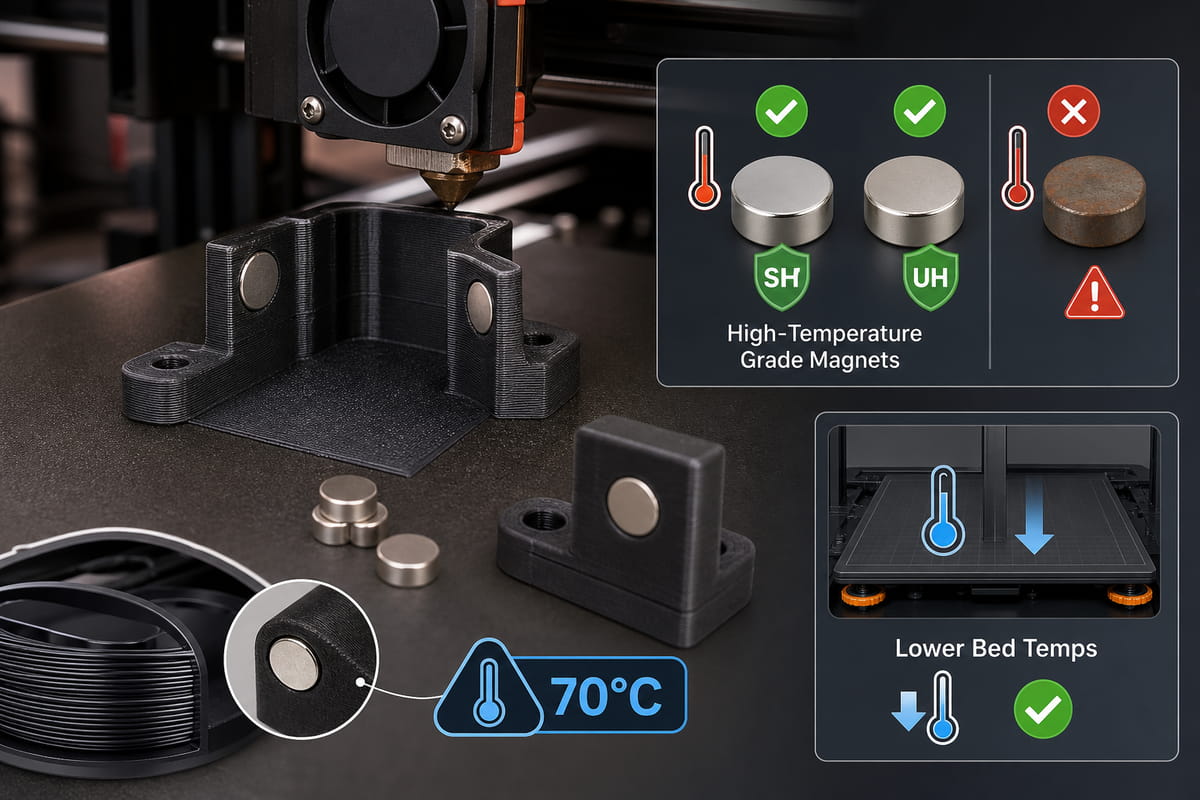
Vejo pessoas a fazer isto constantemente. Imprimem com ASA ou ABS utilizando uma temperatura da base de 100-110 °C, colocam uns ímanes padrão de grau N e depois ficam a perguntar-se por que razão a sua impressão não tem qualquer poder de fixação.
Aqueles ímanes baratos da Amazon? A maioria começa a perder a força na faixa dos 80-100 °C. Quando a impressão terminar, o dano permanente já estará feito.
Solução? Ou se utilizam ímanes resistentes a altas temperaturas (SH ou superiores) ou se imprime a temperaturas mais baixas da base. Pessoalmente, imprimo com Atomic ASA a uma temperatura da base de 70 °C – a deformação é mínima e os meus ímanes mantêm-se em boas condições.
Cenário 2: Limpeza de condutas com vapor
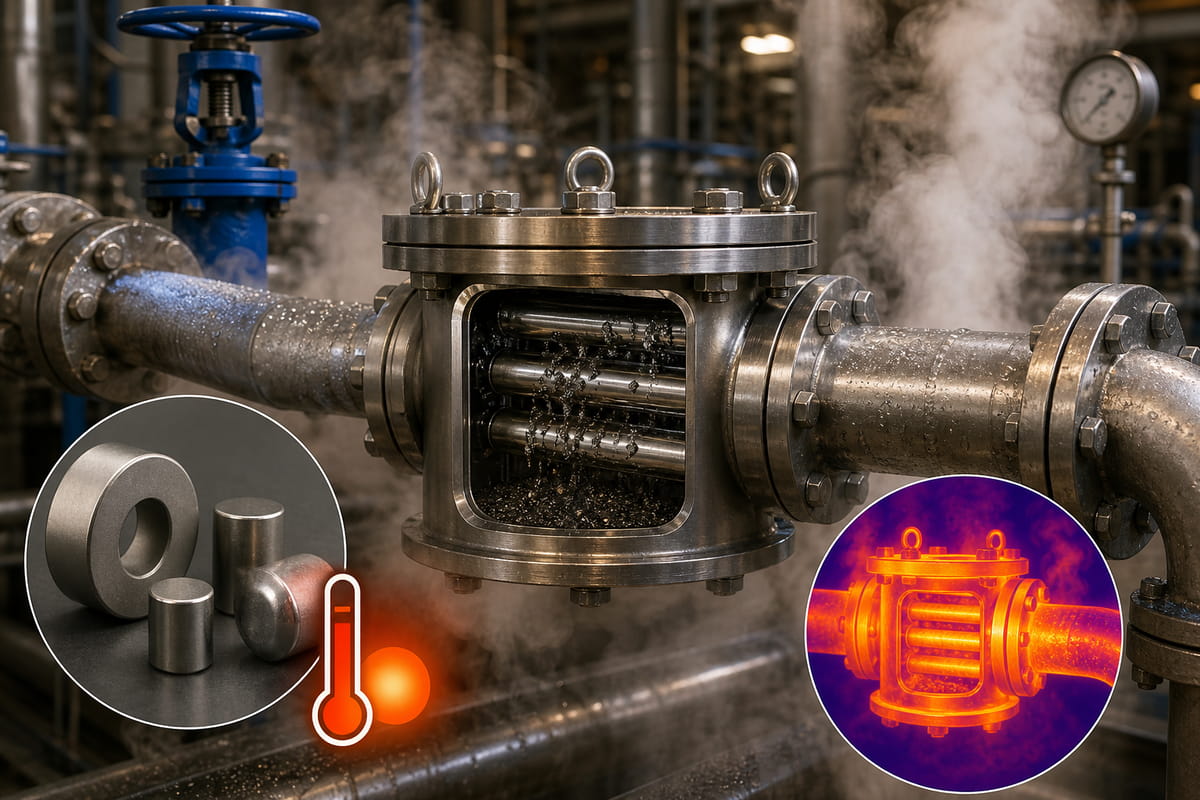
Se estiver a utilizar separadores magnéticos numa conduta que é limpa com vapor (normalmente a temperaturas superiores a 100 °C), os ímanes de neodímio padrão ficarão permanentemente danificados. A maioria dos utilizadores nem sequer faz ideia de que o desempenho da separação magnética caiu drasticamente.
Para estas aplicações, são necessários ímanes com classificação para altas temperaturas. Ou, melhor ainda, opte por ímanes de samário-cobalto (SmCo) para ambientes extremos — estes suportam temperaturas até 300 °C.
Conclusão
Então, a que temperatura é que os ímanes de neodímio perdem o magnetismo?
Os ímanes padrão de classe N começam a perder a sua força a 80 °C (176 °F), com uma perda totalmente reversível. O dano permanente ocorre acima da temperatura máxima de funcionamento da respetiva classe (que varia entre 100 °C e 230 °C, dependendo da classe). A desmagnetização total ocorre à temperatura de Curie, entre 310 °C e 400 °C.
Mas lembre-se: a forma é importante. Os ímanes finos e largos avariam-se mais cedo. Os ímanes altos e estreitos resistem melhor ao calor. E as temperaturas baixas? Tornam os seus ímanes mais fortes até cerca de -130 °C.
Eis o meu conselho: verifica sempre a classe do teu íman e a sua forma antes de o expor ao calor. Utilize uma calculadora do coeficiente de permeabilidade se quiser ser preciso. E, em caso de dúvida, compre um tipo com resistência a temperaturas mais elevadas do que aquela que acha que precisa.
Porque não há nada pior do que terminar um projeto, ir usá-lo e perceber que os ímanes agora não passam de espaçadores de metal caros.
Agora vai ver as especificações desses ímanes que acabaste de comprar. Podes ficar surpreendido.