
Guia das propriedades magnéticas dos ímanes de neodímio
Compreender as principais propriedades magnéticas dos ímanes de neodímio, incluindo remanência, coercividade, BHmax, densidade de fluxo magnético, permeabilidade e desempenho em função da temperatura, para aplicações industriais e de engenharia.
A Osenc Magnets fornece orientação técnica com enfoque na engenharia para a seleção de materiais magnéticos de NdFeB utilizados em motores, sistemas de automação, separadores magnéticos, sensores, equipamentos de energias renováveis e conjuntos industriais de precisão.
O que são as propriedades magnéticas?
As propriedades magnéticas descrevem a forma como um íman permanente gera, mantém e resiste a alterações no seu campo magnético.
Estas propriedades determinam:
- Força magnética
- Desempenho em termos de força de tração
- Estabilidade térmica
- Resistência à desmagnetização
- Eficiência do circuito magnético
Compreender as propriedades magnéticas é essencial para selecionar o íman de neodímio adequado para aplicações industriais.

Principais propriedades magnéticas dos ímanes de NdFeB

Remanência (Br)

Coercividade (Hcb)

Coercividade intrínseca (Hcj)

Produto de Energia Máxima (BHmax)

Densidade do fluxo magnético

Permeabilidade

Temperatura de Curie
Cada propriedade influencia o comportamento do íman em diferentes condições de funcionamento.
Remanência (Br)
O que é a remanência?
A remanência representa a densidade de fluxo magnético residual que permanece num íman após a magnetização.
Indica a intensidade do campo magnético do íman em condições de circuito aberto.
Unidade de medida
- Tesla (T)
- Gauss (G)
Fórmula da remanência
Br
Uma remanência mais elevada significa, geralmente, uma saída de campo magnético mais forte.
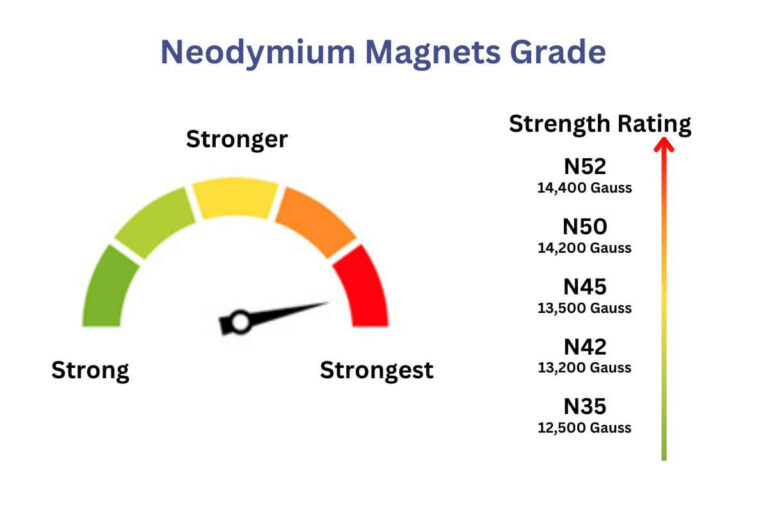
Valores típicos de remanência do NdFeB
| Nota | Remanência (Br) |
|---|---|
| N35 | 1,17–1,21 T |
| N42 | 1,29–1,32 T |
| N52 | 1,42–1,45 T |
Aplicações que exigem elevada remanência
- Motores para veículos elétricos
- Separadores magnéticos
- Robótica
- Sensores de alto desempenho

Coercividade (Hcb)
O que é a coercividade?
A coercividade mede a resistência de um íman à desmagnetização.
Indica a intensidade do campo magnético oposto necessária para reduzir o fluxo magnético a zero.
Unidade de medida
- kA/m
- Oersted (Oe)
Fórmula da coercividade
Hcb
Uma maior coercividade melhora a estabilidade magnética em ambientes exigentes.
Aplicações que exigem elevada coercividade
- Motores
- Sistemas de alta temperatura
- Automação Industrial
- Equipamento de energia renovável

Coercividade intrínseca (Hcj)
O que é a coercividade intrínseca?
A coercividade intrínseca mede a resistência à desmagnetização irreversível.
É especialmente importante para:
- Aplicações a altas temperaturas
- Campos magnéticos opostos intensos
- Sistemas motores dinâmicos
Fórmula da coercividade intrínseca
Hcj
Por que é que a Hcj é importante
Valores mais elevados de Hcj melhoram:
- Estabilidade térmica
- Fiabilidade magnética a longo prazo
- Resistência à inversão do campo magnético

Produto de Energia Máxima (BHmax)
O que é o BHmax?
O BHmax mede a densidade de energia magnética máxima disponível num material magnético.
É um dos indicadores mais importantes do desempenho do íman.
Fórmula do BHmax
BHmax
Unidade de medida
- MGOe
- kJ/m³
Por que é que o BHmax é importante
Valores mais elevados de BHmax permitem:
- Íman de tamanho mais pequeno
- Campo magnético mais intenso
- Modelos de motores mais compactos
- Maior eficiência energética

Valores típicos de BHmax
| Nota | BHmax |
|---|---|
| N35 | 33–36 MGOe |
| N42 | 40–43 MGOe |
| N52 | 50–53 MGOe |
Densidade do fluxo magnético
O que é a densidade do fluxo magnético?
A densidade do fluxo magnético mede a intensidade do campo magnético num local específico.
Unidade de medida
- Tesla (T)
- Gauss (G)
Fórmula da densidade de fluxo
B = Φ/A
Variáveis
- B = Densidade do fluxo magnético
- Φ = Fluxo magnético
- A = Área
Gauss vs. Tesla
1 Tesla = 10 000 Gauss
Fluxo magnético
O que é o fluxo magnético?
O fluxo magnético descreve o campo magnético total que atravessa uma determinada área.
Fórmula do fluxo magnético
Φ = B · A
Permeabilidade
O que é a permeabilidade magnética?
A permeabilidade descreve a facilidade com que os campos magnéticos atravessam um material.
Fórmula da permeabilidade
μ=B/H
Variáveis
- μ = Permeabilidade magnética
- B = Densidade do fluxo magnético
- H = Intensidade do campo magnético
Importância nos circuitos magnéticos
A permeabilidade afeta:
- Fluxo magnético
- Eficiência central
- Desempenho do motor
- Conceção de sistemas eletromagnéticos

Temperatura de Curie
O que é a temperatura de Curie?
A temperatura de Curie é a temperatura à qual um íman perde completamente as suas propriedades ferromagnéticas.
Temperatura de Curie típica do NdFeB
- Aproximadamente 310 °C–400 °C, dependendo da composição
Nota importante
As temperaturas de funcionamento devem permanecer muito abaixo da temperatura de Curie, para evitar a degradação permanente do magnetismo.
Coeficientes de temperatura
As propriedades magnéticas variam com a temperatura.
Exemplo de relação
B(T) = B₀(1 − αΔT)
Temperaturas mais elevadas reduzem, em geral, a intensidade do campo magnético.
Relação entre as propriedades magnéticas
Remanência mais elevada
→ Campo magnético mais intenso
Coercividade mais elevada
→ Melhor resistência à desmagnetização
BHmax mais elevado
→ Maior densidade energética
Hcj mais elevado
→ Maior estabilidade térmica

Propriedades magnéticas por grau
| Nota | Br | Hcj | BHmax |
|---|---|---|---|
| N35 | 1,17–1,21 T | ≥955 kA/m | 33–36 MGOe |
| N42 | 1,29–1,32 T | ≥955 kA/m | 40–43 MGOe |
| N52 | 1,42–1,45 T | ≥955 kA/m | 50–53 MGOe |
Aplicações de Engenharia

Aplicações de motores
Um valor elevado de BHmax e uma densidade de fluxo elevada melhoram a eficiência do motor e a densidade de binário.

Sistemas de alta temperatura
A elevada coercividade intrínseca reduz o risco de desmagnetização térmica.

Separadores magnéticos
A elevada remanência melhora o desempenho na captura de materiais ferrosos.

Sensores
As propriedades magnéticas estáveis melhoram a consistência e a precisão do sinal.
Recursos técnicos relacionados
Guia de Níveis das Escolas Magnet
Compare a força magnética e a resistência à temperatura entre os diferentes tipos de NdFeB.
Guia de força de tração
Compreender como os revestimentos afetam a força de retenção magnética.

Resistência à temperatura
Selecione o tipo de íman adequado para temperaturas elevadas.

Guia de orientação da magnetização
Conheça os métodos de magnetização axial, radial e multipolar.
Perguntas frequentes
A propriedade mais importante depende da aplicação. O BHmax, a remanência e a coercividade são, normalmente, parâmetros críticos.
O BHmax mede a densidade de energia magnética máxima disponível no material do íman.
A coercividade melhora a resistência à desmagnetização, especialmente em ambientes de alta temperatura ou dinâmicos.
Em geral, sim. Um valor mais elevado de BHmax permite uma maior densidade de energia magnética e um melhor desempenho magnético.
O Br mede a força magnética residual, enquanto o Hcj mede a resistência à desmagnetização irreversível.
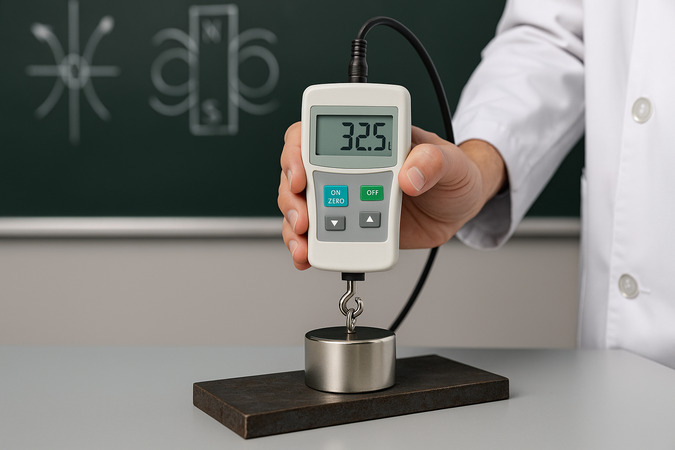
As propriedades magnéticas são normalmente medidas utilizando analisadores de gráficos de histerese, medidores de gauss e equipamento de ensaio magnético.
Propriedades magnéticas personalizadas dos ímanes de NdFeB
A Osenc Magnets fornece ímanes NdFeB personalizados, consultoria de engenharia e assistência técnica para sistemas magnéticos industriais em todo o mundo.