Resumo rápido
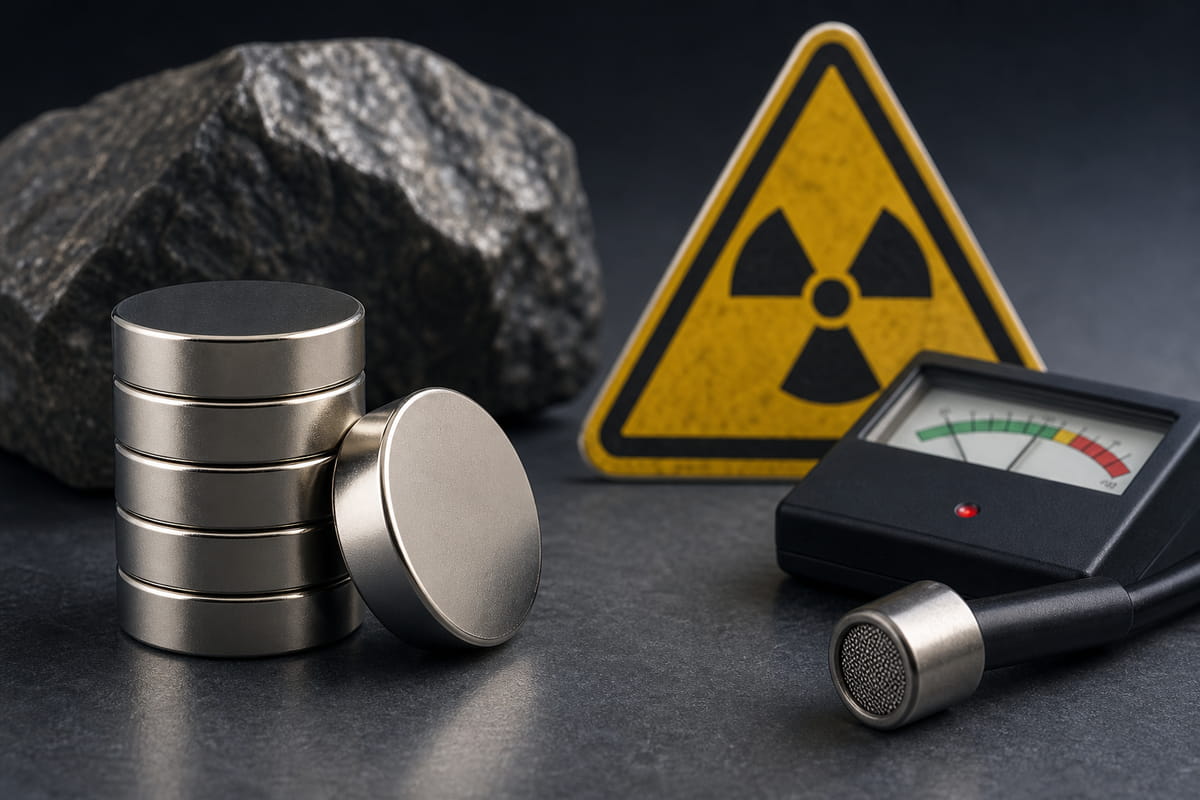
Neodymium magnets are not radioactive in any meaningful sense — their trace radioactive isotopes have half-lives billions of times longer than the universe is old, so they emit virtually nothing. A magnetic field is not radiation, and any thorium found in rare earth ore is removed during refinement before reaching the finished product.
The real hazards aren’t radiation at all — they’re the magnet’s raw strength (pinching, swallowing risk for kids, electronics damage) and brittleness. Handle them with common sense, keep them away from children, and you’re completely safe.
Are neodymium magnets radioactive? No. Not in any way that matters for your health.
I know that’s probably not the answer you expected. After all, neodymium is a “rare earth” element. And anything with the word “rare earth” attached to it sounds like it belongs in a hazmat suit.
But here’s the deal:
The neodymium magnets in your headphones, your fridge, your kid’s magnetic tiles, and your power tools are completely safe to handle. They don’t emit dangerous radiation. And they won’t give you cancer.
Neste guia, na qualidade de profissional fabricante de ímanes de neodímio, I’m going to break down exactly why that’s true… in plain English (no physics degree required).
Vamos começar.
Are Neodymium Magnets Radioactive?
Naturally occurring neodymium is made up of seven different isotopes.
Five of them (like neodymium-142) are 100% stable. They don’t decay. They don’t emit anything.
The other two? Technically radioactive. But stay with me, because this is where it gets interesting.
Those two isotopes are neodymium-144 and neodymium-150. And yes, they decay. But their half-lives are roughly:
- Neodymium-144: about 2.3 quintillion years
- Neodymium-150: about 9.3 quintillion years
To put that in perspective: the universe is around 13.8 billion years old.
These isotopes take billions of times longer than the entire age of the universe just to decay halfway.
So while it’s technically true that neodymium contains radioactive isotopes, the amount of radiation they give off is so small it’s basically undetectable. We’re talking practically zero.
Bottom line? The radioactivity is real on paper. But it has zero practical relevance to your life.
Wait… What About “Synthetic” Isotopes?
Good question.
Scientists have created 30+ artificial isotopes of neodymium in labs.
And yeah, a lot of those são highly radioactive.
But here’s the thing: they’re incredibly short-lived. Many of them decay in a matter of seconds. They’re created in controlled lab settings for research.
They are não floating around in the magnets you buy online or the ones holding your grocery list to the fridge.
So you can scratch that worry off your list too.
Magnetic Fields Are NOT Radiation
This is where a LOT of the confusion comes from. So let me clear it up.
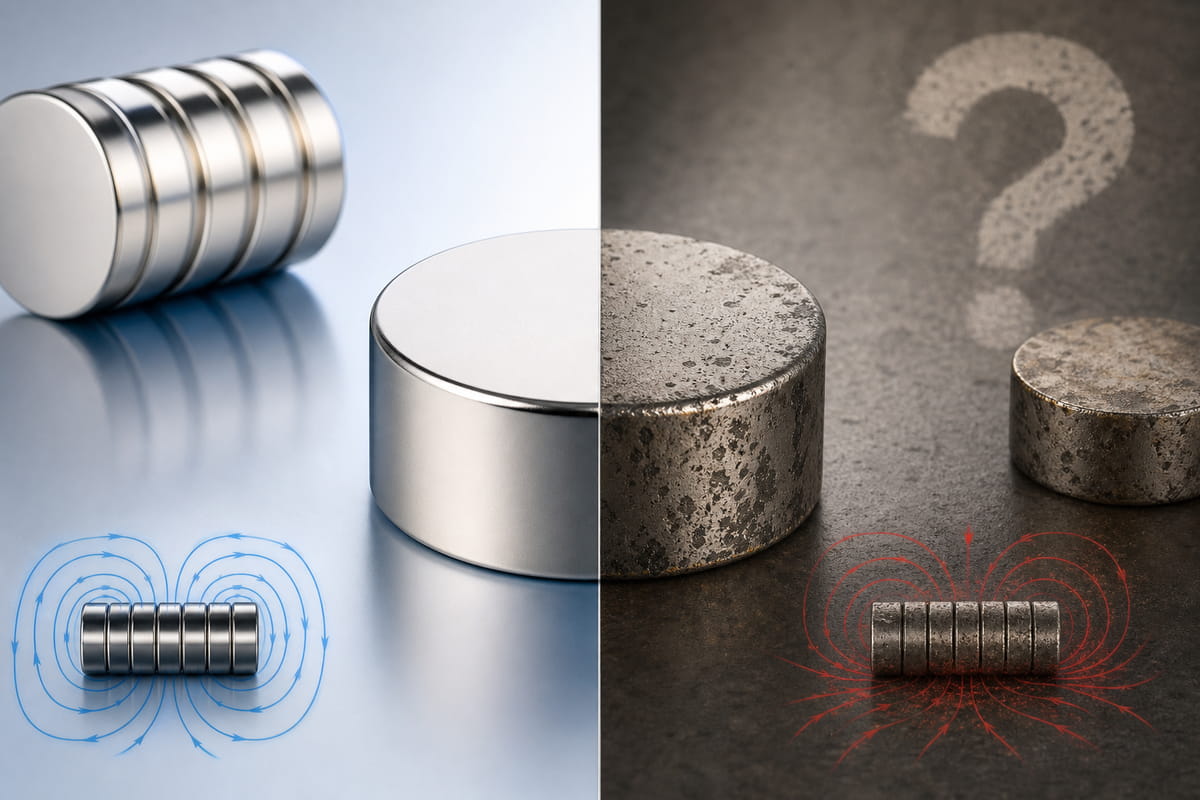
Every magnet produces a magnetic field. That includes powerful Ímanes de NdFeB (which is just shorthand for neodymium-iron-boron).
But a magnetic field is não the same thing as radiation.
In physics, “radiation” usually means energy traveling through space — stuff like X-rays, gamma rays, or particle rays. That kind of radiation can penetrate the body and, in high doses, cause harm.
A magnetic field is totally different. It doesn’t carry that kind of energy. It doesn’t propagate through space the way ionizing radiation does. It’s just an area of magnetic force created by the arrangement of magnetic moments inside the magnet.
Here’s a relatable example:
Your TV, your laptop, and your cell phone all produce magnetic fields. So do rare earth magnets. But none of them are blasting you with harmful rays.
In fact, the World Health Organization has stated that, based on the available evidence, low-level exposure to electromagnetic fields is unlikely to have any known harmful effects on human health.
Em resumo? A strong magnetic field is not radiation. Period.
Why People Confuse “Magnetic” With “Radioactive”
I think there are a few reasons this myth keeps spreading.
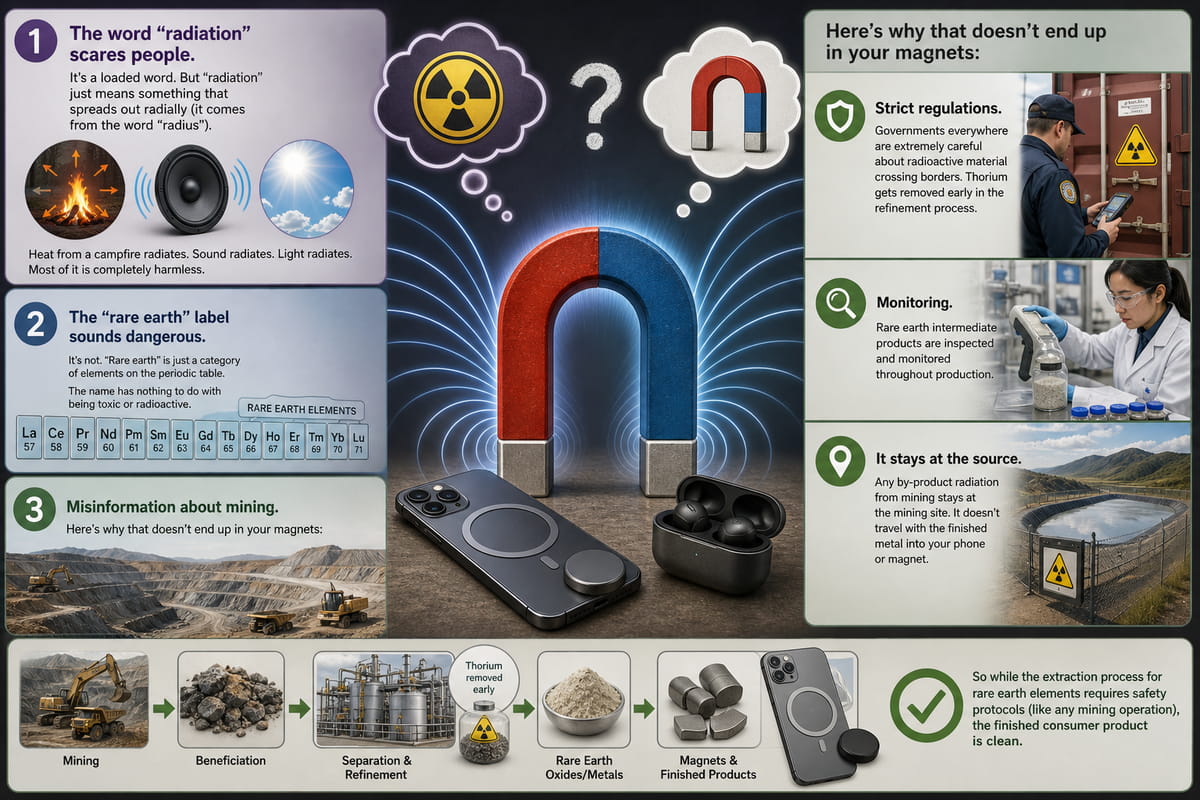
Reason #1: The word “radiation” scares people.
It’s a loaded word. But “radiation” just means something that spreads out radially (it comes from the word “radius”). Heat from a campfire radiates. Sound radiates. Light radiates. Most of it is completely harmless.
Reason #2: The “rare earth” label sounds dangerous.
It’s not. “Rare earth” is just a category of elements on the periodic table. The name has nothing to do with being toxic or radioactive.
Reason #3: Misinformation about mining.
This one actually has a kernel of truth — so let’s tackle it head-on.
The Mining Question (Explained Simply)
Here’s a fair concern I see come up a lot:
“If neodymium is mined alongside radioactive elements, doesn’t that make the magnets radioactive?”
Great question. Let me explain.
It’s true that the ores containing rare earth elements like neodymium sometimes coexist with trace amounts of thorium — which é a naturally radioactive element.
But here’s why that doesn’t end up in your magnets:
- Strict regulations. Governments everywhere are extremely careful about radioactive material crossing borders. Thorium gets removed early in the refinement process.
- Monitoring. Rare earth intermediate products are inspected and monitored throughout production.
- It stays at the source. Any by-product radiation from mining stays at the mining site. It doesn’t travel with the finished metal into your phone or magnet.
So while the extraction process for rare earth elements requires safety protocols (like any mining operation), the finished consumer product is clean.
Dica de profissional: A lot of the scariest claims about “radioactive magnet waste” come from sources funded by competing industries (like fossil fuels) that have an interest in making renewable tech look bad. Always check who’s behind the claim.
But What About Magnets in Medical Devices?
Here’s a fascinating real-world test that settles this even further.
Neodymium magnets are used inside medical devices — things like mixers and stirrers used in labs and hospitals. And those devices often need to be sterilized using X-ray and gamma-ray radiation.
So the question becomes: does blasting a neodymium magnet with actual radiation hurt it?
Studies have looked at exactly this. When NdFeB magnets are exposed to gamma radiation, the magnetic flux loss is generally around ±0.5% — which is basically nothing for most applications. One extensive testing program found the total magnetic moment variation was only about 5%, which matched the control study.
Notice what that tells us:
The magnet is on the receiving end of radiation in those tests. It’s being irradiated by an external source. The magnet itself isn’t producing radiation — it’s just sitting there absorbing a tiny, harmless dose.
That’s the opposite of “emitting radiation.”
So Are Neodymium Magnets Dangerous At All?
Okay, so radiation isn’t the concern. But I’d be doing you a disservice if I told you these magnets are 100% risk-free in every way.
Não são.
Os ímanes de neodímio são os strongest permanent magnets commercially available. And that incredible strength comes with a few real hazards you should know about.
Here are the ones that actually matter:
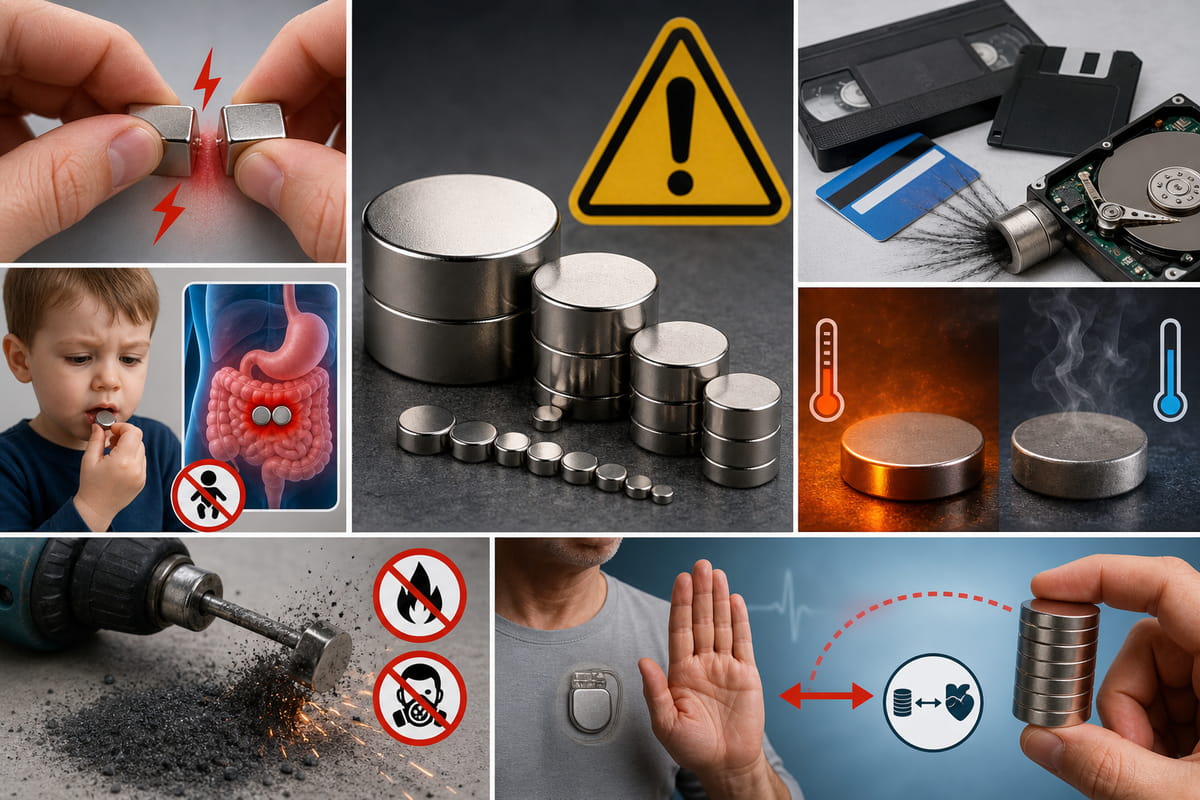
1. Pinching and skin injuries. These magnets snap together with shocking force. Get your skin caught between two of them and you’ll get a nasty pinch — large ones can even break bones. When separating them, slide them apart instead of pulling.
2. Swallowing risk (especially for kids). This is the big one. The standard sizes range from about 5mm to 100mm. If a child swallows two or more, the magnets can attract each other no interior the digestive tract, causing serious intestinal damage. Keep them locked away from children. If swallowed, seek medical help immediately.
3. They damage electronics and magnetic media. A strong magnetic field can corrupt older magnetic storage (floppy disks, cassette tapes, credit cards) and harm sensitive electronics. (Good news: modern smartphones with SSDs are generally fine.)
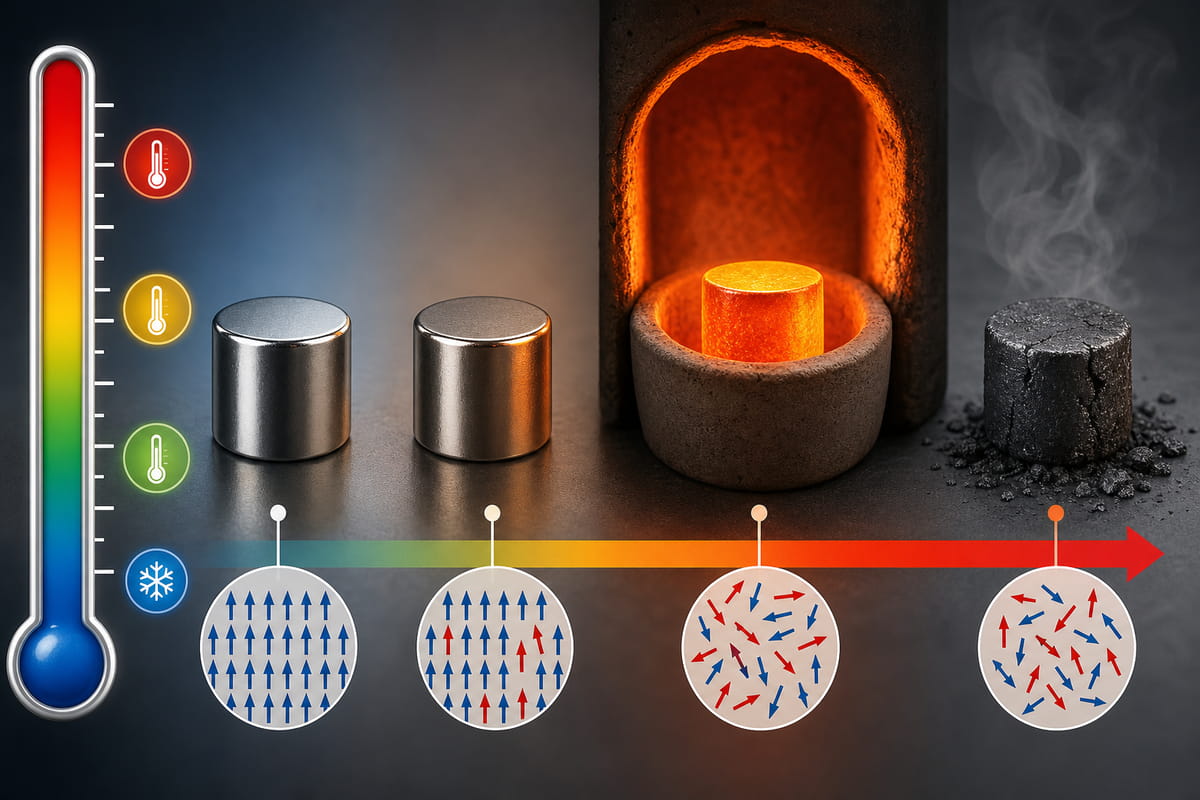
4. They can demagnetize with heat. Above roughly 80°C, a standard neodymium magnet starts losing magnetism. Past the Ponto de Curie (around 310–400°C depending on grade), demagnetization becomes permanent.
5. Don’t drill or grind them. The dust is flammable and not something you want to inhale.
6. Pacemaker interference. Keep neodymium magnets at least six inches (15 cm) away from pacemakers and similar implanted devices.
See the pattern? Every real risk comes from the magnet’s strength ou brittleness — not from radiation.
A Quick Note on Coatings and Corrosion
One more thing worth mentioning.
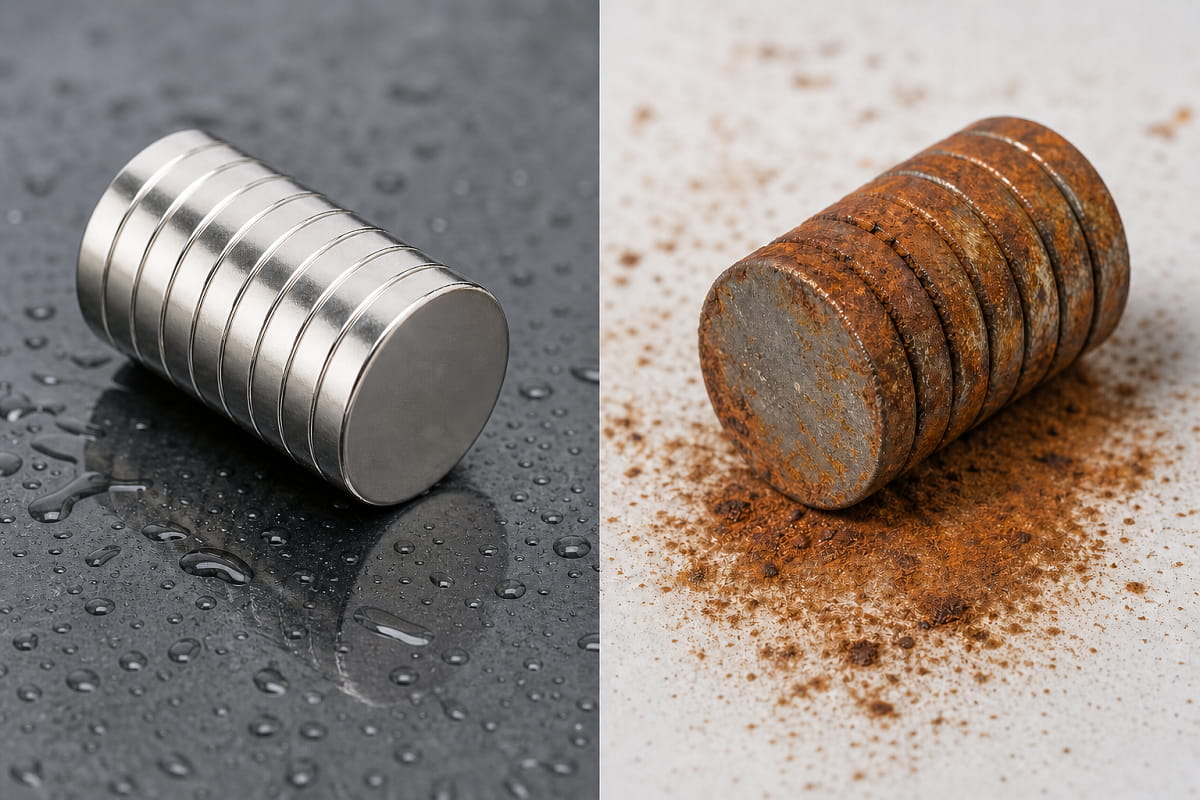
Neodymium magnets rust easily because of the iron in the NdFeB alloy. That’s why they’re almost always coated — usually with nickel-copper-nickel plating, but sometimes zinc, epoxy, or even gold.
This coating does two jobs:
- It protects against corrosion and oxidation.
- It helps prevent chipping and damage.
(Heads up: if you have a nickel allergy, the standard nickel plating can trigger a reaction. Wear gloves or choose a different coating.)
This has nothing to do with radiation either — but it’s a genuine practical thing to know if you handle these magnets regularly.
The Final Verdict
Let me bring it all home.
Então, are neodymium magnets radioactive?
No. They’re not.
- The naturally radioactive isotopes they contain have half-lives billions of times longer than the universe is old — meaning they emit virtually nothing.
- A magnetic field is não radiation.
- Thorium and other radioactive materials are removed during refinement and never make it into your magnet.
- Even when blasted with real radiation in medical sterilization, these magnets barely change.
You can use them in your home, your projects, your electronics, and your hobbies without any radiation worry whatsoever.
O apenas things you need to respect are their raw magnetic strength, their brittleness, and the swallowing hazard for kids. Handle them with a little common sense, and you’re completely safe.
So go ahead and enjoy these incredible little powerhouses. Just keep them away from your credit cards… and your toddler. 🙂