
Recursos técnicos e guias de engenharia sobre ímanes de neodímio
Explore informações técnicas, recursos de engenharia e guias de referência industriais sobre ímanes de neodímio, incluindo classes de ímanes, força de tração, revestimentos, direções de magnetização, resistência à temperatura e propriedades magnéticas.
Fornecemos recursos técnicos orientados para a engenharia, com o objetivo de ajudar fabricantes OEM, compradores industriais e equipas de desenvolvimento de produtos a selecionar as soluções adequadas em ímanes de NdFeB para aplicações exigentes.
Categorias de recursos técnicos
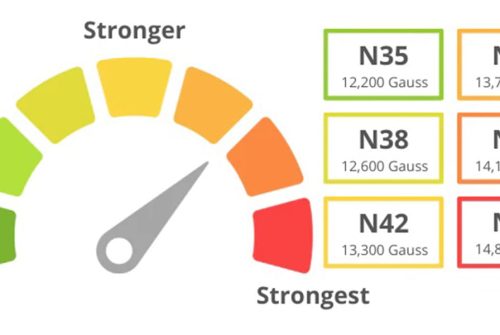
Níveis de ímanes
Compreender as diferenças entre os tipos de ímanes de neodímio N35, N42, N52 e os destinados a altas temperaturas.
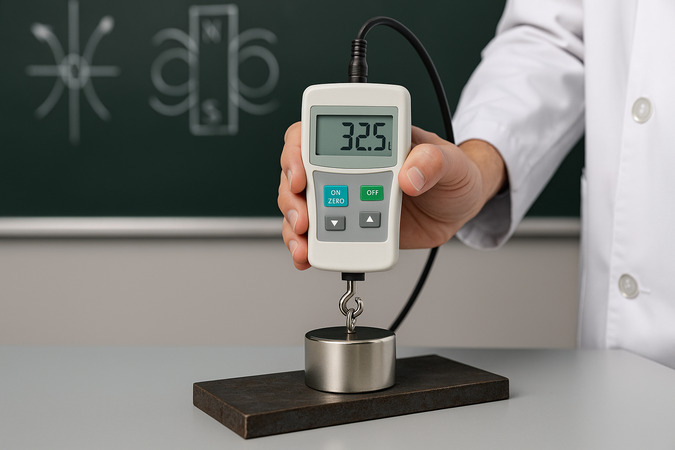
Força de tração
Saiba como a força de atração é afetada pelo tamanho do íman, pelo entreferro, pelo tipo de material e pelas condições da superfície de contacto.

Revestimentos magnéticos
Comparar a resistência à corrosão, a durabilidade e o desempenho ambiental de diferentes revestimentos magnéticos.

Direções de magnetização
Conheça os métodos de magnetização axial, diametral, radial e multipolar.

Resistência à temperatura
Selecione o tipo de íman adequado para ambientes de funcionamento a altas temperaturas.
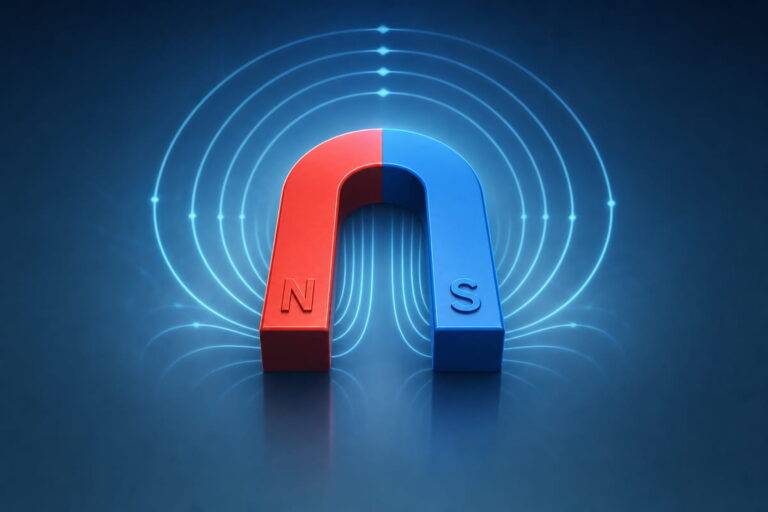
Propriedades magnéticas
Compreender a remanência, a coercividade, o BHmax, a densidade de fluxo e a intensidade do campo magnético.
Guia de Níveis das Escolas Magnet
Compreender os tipos de ímanes NdFeB
Os graus dos ímanes de neodímio indicam o produto de energia magnética e as características de desempenho dos ímanes sinterizados de NdFeB. Os graus mais elevados proporcionam, geralmente, campos magnéticos mais fortes e uma maior densidade de energia magnética.
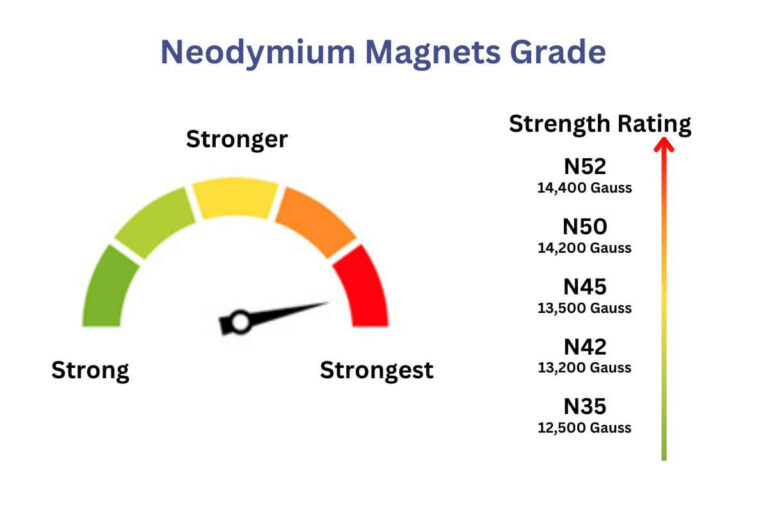
Classes comuns de ímanes de neodímio
| Nota | Remanência (Br) | BHmax | Temperatura máxima de funcionamento |
|---|---|---|---|
| N35 | 1,17–1,21 T | 33–36 MGOe | 80 °C |
| N42 | 1,29–1,32 T | 40–43 MGOe | 80 °C |
| N52 | 1,42–1,45 T | 50–53 MGOe | 80 °C |
Tipos para altas temperaturas
| Tipo de nota | Temperatura máxima de funcionamento |
|---|---|
| M | 100 °C |
| H | 120 °C |
| SH | 150 °C |
| UH | 180 °C |
| EH | 200 °C |
Guia de força de tração
O que é a força de atração de um íman?
A força de tração refere-se à força máxima necessária para separar um íman de uma superfície ferromagnética plana em condições ideais de ensaio.
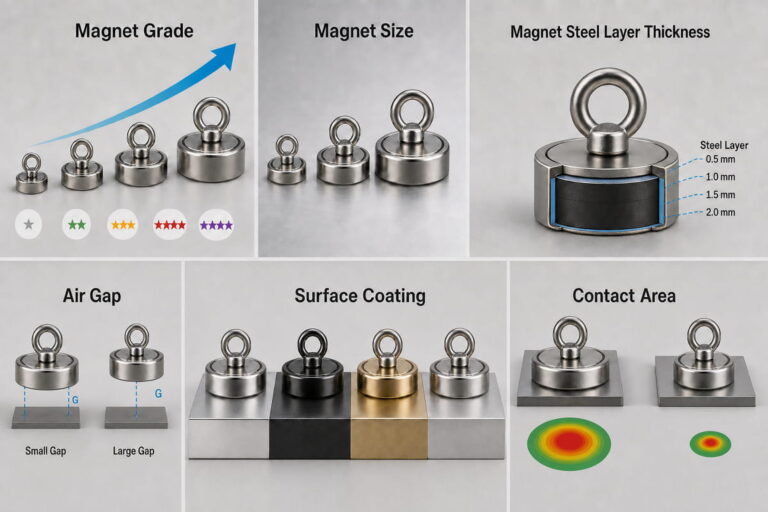
Fatores que afetam a força de tração
- Grau magnético
- Tamanho do íman
- Espessura do aço
- Espaço de ar
- Revestimento de superfícies
- Área de contacto
Fórmula da força de tração

Tabela de exemplos de força de tração
| Diâmetro | Espessura | Nota | Força de tração |
|---|---|---|---|
| 10 mm | 2 mm | N42 | 1,2 kg |
| 20 mm | 5 mm | N52 | 8,5 kg |
| 30 mm | 10 mm | N52 | 28 kg |
Guia de revestimento magnético
Por que razão os revestimentos magnéticos são importantes
Os ímanes de neodímio são suscetíveis à corrosão devido ao teor de ferro presente nos materiais NdFeB. Os revestimentos protetores melhoram a resistência à corrosão e a durabilidade ambiental.
Revestimentos comuns para ímanes
| Revestimento | Resistência à corrosão | Resistência à névoa salina | Aparência |
|---|---|---|---|
| NiCuNi | Médio | 24–48 h | Prateado metálico |
| Epoxi | Elevado | 96h+ | Preto |
| Zinco | Médio | 12–24 h | Azul/Prateado |
| Ouro | Médio | 24–48 h | Acabamento dourado |
| PTFE | Elevado | Excelente | Cinza escuro |
Seleção do revestimento em função do ambiente
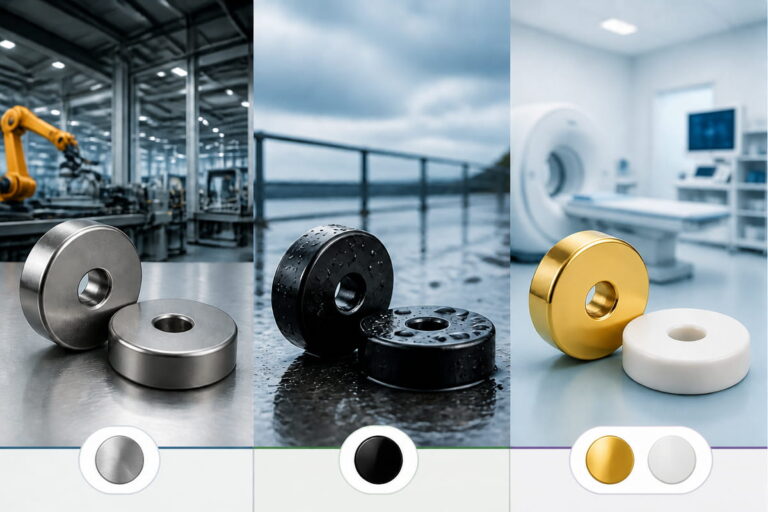
Aplicações industriais em recintos fechados
O revestimento NiCuNi é frequentemente utilizado em ambientes industriais normais.
Ambientes ao ar livre e húmidos
O revestimento epóxi proporciona uma maior resistência à corrosão em ambientes propensos à humidade.
Aplicações médicas e especializadas
Podem ser selecionados revestimentos de ouro e PTFE para requisitos específicos.
Guia de orientação da magnetização
Compreender as direções de magnetização
A direção da magnetização determina a orientação dos pólos magnéticos no interior de um íman e influencia significativamente o desempenho magnético em diferentes aplicações.
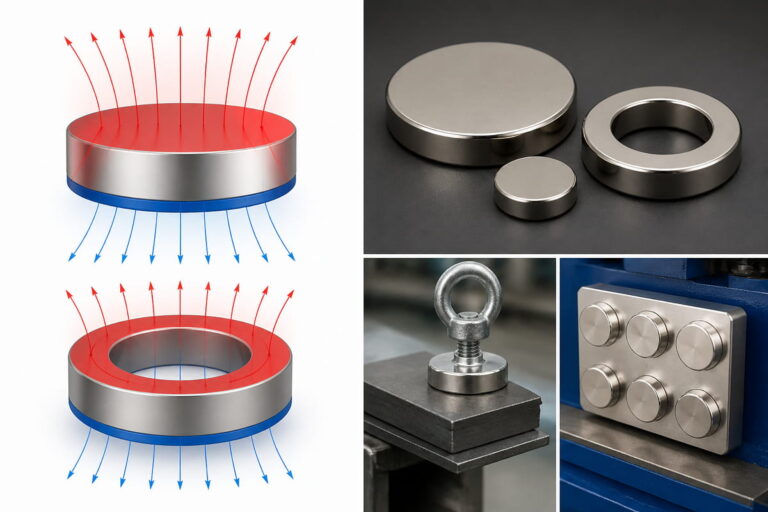
Magnetização axial
Os pólos magnéticos estão localizados nas superfícies planas do íman.
Utilizações comuns
- Ímanes em disco
- Ímanes em anel
- Sistemas de fixação
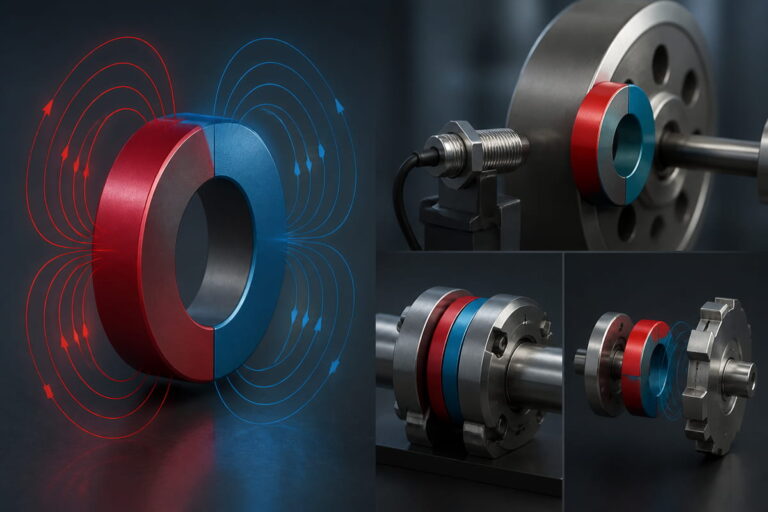
Magnetização diametral
Os pólos magnéticos estão localizados em lados opostos e curvos do íman.
Utilizações comuns
- Sensores
- Sistemas rotativos
- Acoplamentos
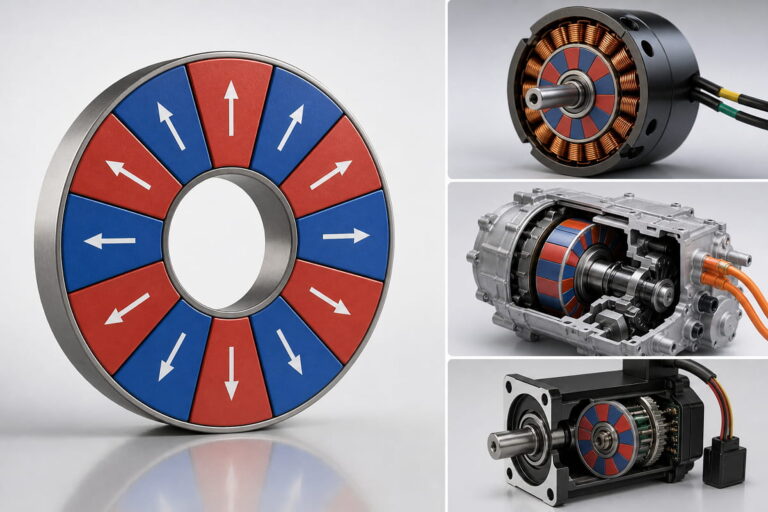
Magnetização radial
Os pólos magnéticos estão distribuídos radialmente à volta do íman.
Utilizações comuns
- Motores sem escovas
- Motores para veículos elétricos
- Servomotores
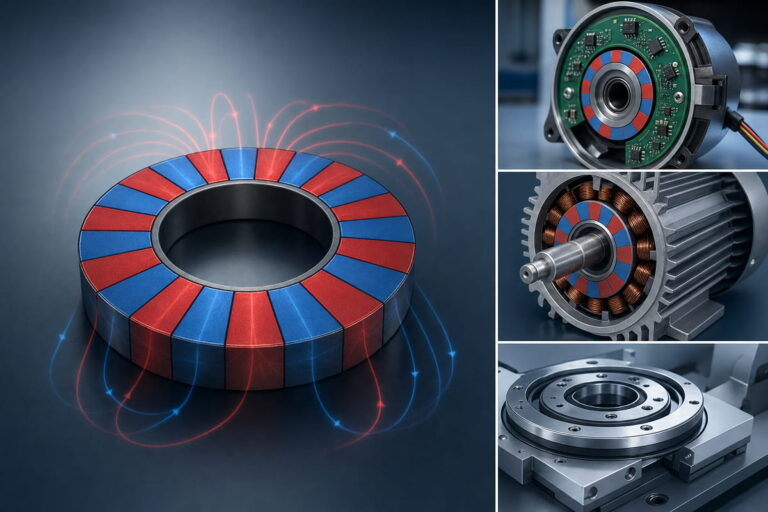
Magnetização multipolar
Existem vários pólos norte e sul distribuídos pela superfície do íman.
Utilizações comuns
- Codificadores
- Sistemas de motor
- Equipamento rotativo de alta precisão
Guia de resistência à temperatura
Temperatura máxima de funcionamento dos ímanes de NdFeB
Os ímanes de neodímio podem sofrer uma desmagnetização irreversível se forem expostos a temperaturas que excedam os seus limites nominais de funcionamento.
Comparação de classes de temperatura
| Tipo de nota | Temperatura máxima de funcionamento |
|---|---|
| Padrão | 80 °C |
| M | 100 °C |
| H | 120 °C |
| SH | 150 °C |
| UH | 180 °C |
| EH | 200 °C |
Fatores que afetam o desempenho em termos de temperatura
- Grau magnético
- Conceção de circuitos magnéticos
- Condições ambientais
- Risco de desmagnetização
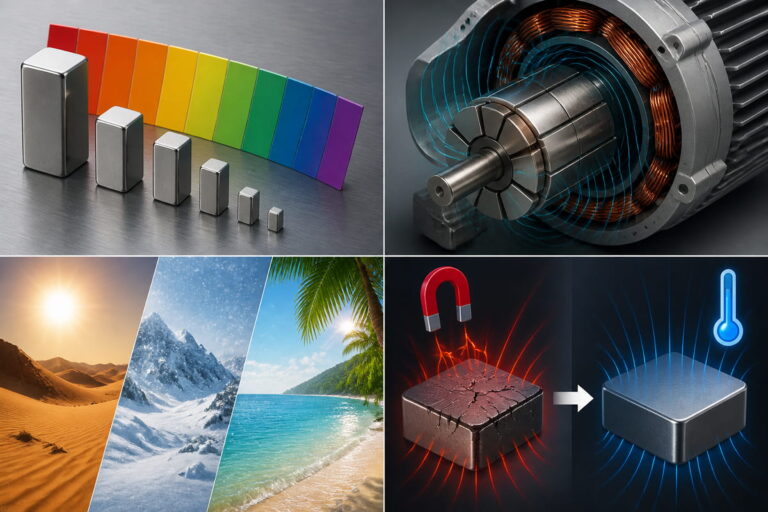
Aplicações a altas temperaturas
- Motores para veículos elétricos
- Automação Industrial
- Sistemas Aeroespaciais
- Equipamento de energia renovável

Guia de Propriedades Magnéticas
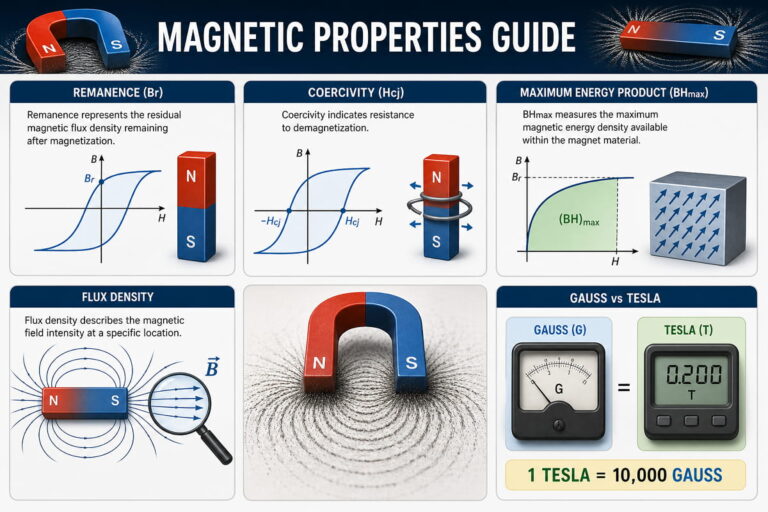
Remanência (Br)
A remanência representa a densidade de fluxo magnético residual que permanece após a magnetização.
Coercividade (Hcj)
A coercividade indica a resistência à desmagnetização.
Produto de Energia Máxima (BHmax)
O BHmax mede a densidade máxima de energia magnética disponível no material do íman.
Densidade de fluxo
A densidade de fluxo descreve a intensidade do campo magnético num local específico.
Gauss vs. Tesla
1 Tesla = 10 000 Gauss
Apoio à Engenharia e à Produção
A Osenc Magnets apoia as equipas de engenharia através de consultoria técnica, fabrico de ímanes personalizados e soluções magnéticas orientadas para as aplicações.
Serviços de Engenharia
- Seleção do material magnético
- Conceção da magnetização
- Otimização do fluxo
- Desenvolvimento de protótipos
- Apoio à Fabricação Personalizada

Capacidades de fabrico
- Produção de NdFeB sinterizado
- Maquinação CNC de precisão
- Magnetização multipolar
- Revestimento de superfícies
- Processamento com tolerâncias rigorosas
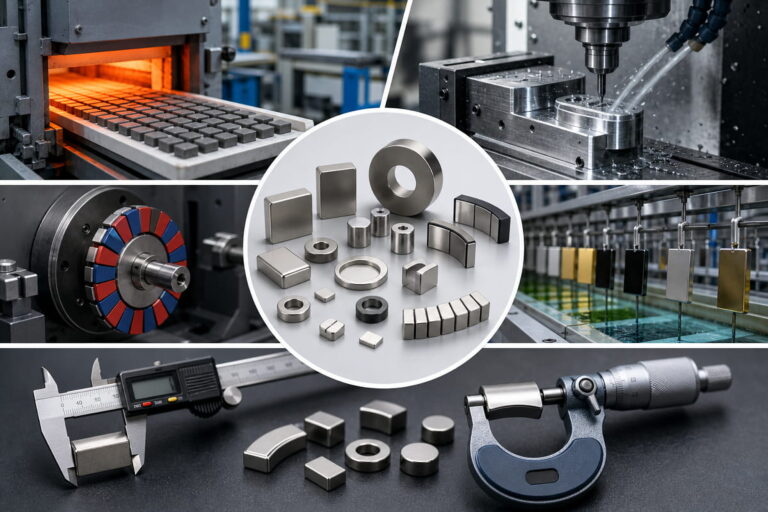
Suporte técnico para ímanes de neodímio personalizados
Solicite aconselhamento técnico, assistência na seleção de ímanes ou apoio à produção personalizada para o seu projeto.